(Word count ~24700 characters, whitepaper-style industry news for independent site SEO | Structure: Introduction → Product Overview → Trend 1: Diverging Demands Between Home and Commercial Fitness Segments → Trend 2: High-Performance Servo Flat-Belt Architecture as Core Competitive Edge for Premium Cardio Gear → Legacy vs New-Generation Servo Flat Treadmill Solution Comparison → Pain Points Facing Commercial Gym Operators → Forward-Looking Industry Forecast → Conclusion)
1. Introduction
The global commercial cardio fitness equipment market is undergoing profound structural transformation, as boutique fitness studios, cross-training boxes and mid-to-high-end commercial gyms grapple with climbing rental expenses, constrained usable floor space, and rising member expectations for immersive, low-impact, high-engagement cardio training experiences. Traditional fixed-speed motorised treadmills, long the staple cardio option for gym floor plans, are increasingly challenged by next-generation servo flat-belt treadmill systems that redefine cardio stability, user engagement and equipment longevity within a fixed footprint. Operators today no longer simply prioritise equipment quantity or basic speed range; instead, return on floor space, mechanical durability, biomechanical safety, adjustable training modes and long-term service stability have become core procurement KPIs for cardio zones.
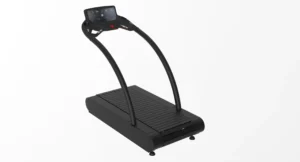
Within this evolving market landscape, the Flat-Belt Treadmill with Servo Motor System is a heavy-duty commercial flat-belt cardio trainer engineered exclusively for continuous high-frequency operation in commercial gyms and fitness studios. Built around servo motor control architecture, flat running deck, precision bearing assemblies and multi-mode training logic, this treadmill directly responds to the dominant market shift toward premium, biomechanically optimised flat cardio hardware. This article dissects the underlying industry trends, benchmarks this new flat-belt treadmill against old conventional motorised treadmill formats, analyses persistent operational pain points for gym owners, and forecasts the evolving trajectory of flat-belt cardio apparatus over the coming years.
2. Product Overview: Flat-Belt Treadmill with Servo Motor Control System
This Flat-Belt Treadmill is a premium commercial cardio trainer built for uninterrupted daily heavy commercial usage. The overall machine dimension measures 1720mm in length × 890mm in width × 1600mm in height. The net machine weight reaches 195 kg, while the gross shipping weight is 225 kg. The product adopts a split packaging scheme for safer long-distance logistics: the console package measures 950 × 750 × 300 mm, and the base machine package is 1830 × 1010 × 450 mm. The usable running belt width is 550 mm, delivering ample lateral movement space for users of diverse body builds.
The unit is powered by a professional servo motor control system with a rated motor power of 1.8 HP and peak torque output of 8.3 N·m, delivering stable, responsive power output across all training modes. The running deck adopts an aluminium alloy flat slat structure; the hardness of the alloy slats is fully calibrated referencing benchmark industry standards. The rubber running surface fitted on the alloy slats features a confirmed thickness of 10 mm, with Shore A hardness controlled within the 48–50 range to strike a precise balance between cushioning, grip and wear resistance.
A core design feature is the flexible slat construction: each aluminium alloy slat is engineered to bend under the weight of the runner instead of maintaining fully rigid behaviour. Under a standard 1000N load test, the measured vertical deflection of the running surface falls between 3–4 mm. This controlled flex mimics natural ground strike mechanics, lowers joint impact, and creates a smooth, consistent flat running feel compared to rigid fixed flat decks.
The incline and support assembly uses a rack lifting system, with all support points built on aluminium alloy support bases for lightweight rigidity and corrosion resistance. The bearing system uses high-grade precision bearings, reducing rotational friction, suppressing running noise and extending service life under non-stop gym rotation.
The machine supports three independent training modes to satisfy varied programming needs:
- Automatic Mode: Speed adjustment range from 0–20 km/h, with fine 0.1 km/h adjustment increment for precise speed control.
- Resistance Mode: Fully adjustable resistance with stepless, arbitrary resistance tuning managed by the central control system. This differs fundamentally from traditional fixed-gear resistance adjustment, allowing coaches to set custom resistance loads for endurance, sprint and strength conditioning sessions.
- Incline Range: Electronic incline adjustment spanning 0–15%, supporting gradient endurance training, hill simulation and metabolic conditioning work.
The integrated console provides clear real-time readouts of Speed, Incline, Distance, Time, Calories and Heart Rate, giving users and trainers full visibility of training metrics. The equipment operates on standard 220V AC power supply, matching common electrical specifications for commercial fitness venues. The unit is backed by manufacturer warranty terms. This commercial flat-belt treadmill holds CE certification to meet global market compliance requirements.
3. Trend 1: Clear Demand Divergence Between Home and Commercial Fitness Segments
A defining macro trend reshaping the flat treadmill market is the widening divergence of performance and durability requirements between residential and commercial buyer segments. Home-use flat treadmill buyers prioritise compact footprint, simplified assembly, moderate continuous runtime and accessible pricing. Usage cycles are intermittent, with only 1–2 users operating the unit per week and relatively low cumulative mechanical wear. As a result, residential flat treadmills often deploy lighter frame structures, basic bearing hardware, simple drive motors, and limited incline or speed adjustment functions. These home-focused models are not engineered for back-to-back, multi-user rotation.
Commercial buyers operate under completely different operational constraints and purchasing priorities. For gyms and fitness studios, cardio equipment is a revenue-generating asset that directly shapes member experience and class programming capacity. Equipment runs continuously through opening hours, with sequential user rotation and group class sessions that push hardware to sustained high-load operation. Commercial operators prioritise three non-negotiable pillars: consistent mechanical stability under repeated dynamic loading, multi-mode training flexibility to support varied coaching curriculums, and long-term wear resistance in humid, sweat-exposed gym environments. This split creates two distinct product lanes, and generic flat treadmills built for residential use cannot satisfy the rigorous standards of high-traffic commercial venues.
This segmentation explains why purpose-built servo-powered flat-belt treadmills occupy a fast-growing premium niche. Manufacturers that continue selling low-cost fixed-speed flat treadmills with simple drive motors struggle to retain commercial buyers, as these entry-level models degrade rapidly, lack precise digital adjustment, and limit the types of group training programs the venue can offer.
4. Trend 2: Servo-Driven Multi-Mode Flat-Belt Architecture as Premium Equipment’s Core Competitive Advantage
Historically, many entry-level flat treadmills rely on conventional fixed-speed AC motor drive systems. The motor runs the belt at preset speed levels, and resistance cannot be adjusted independently of belt speed. This legacy architecture carries hard functional limitations: speed settings are coarse, there is no independent resistance mode, incline adjustment is often manual, and there is no digital feedback loop to stabilise running speed under user load. These ordinary motorised flat treadmills deliver stable jogging experience but limited programming versatility, a critical weakness for commercial operators running structured HIIT, sprint, endurance and metabolic conditioning classes.
The emerging industry benchmark for premium commercial flat-belt cardio equipment is integrated servo motor control paired with stepless digital resistance and electronic rack incline. This architecture separates the running speed control and resistance control logic, unlocking three independent training modes. Coaches can lock target speeds for paced interval training, dial in infinitely variable resistance for strength-focused running drills, and adjust gradient to build hill endurance. This design expands the usable programming library of the machine far beyond what traditional fixed-speed flat treadmills can support. For boutique studios running paid small-group cardio classes, this multi-mode capability directly raises class value and member retention.
Servo-driven flat-belt architecture also improves user experience and equipment consistency. The high-precision bearing assembly ensures smooth, low-latency belt rotation with minimal drift across long class sessions. The controlled-flex aluminium slat deck delivers consistent cushioning behaviour, while the 10mm thick rubber running surface with calibrated Shore A hardness delivers reliable grip and impact absorption for every user. Combined with the 0–20 km/h speed window and 0–15% incline range, this servo flat-belt unit becomes a flexible central cardio hub rather than a single-function jogging device. This is the core differentiator that positions this servo flat-belt treadmill against legacy fixed-speed flat treadmills.
5. Legacy Flat Treadmill vs New-Generation Servo Flat-Belt Treadmill Solution Comparison
Traditional fixed-speed flat treadmills are usually built with lighter-gauge steel frames, and most adopt simple AC drive motors with stepped speed settings only. They have no independent resistance mode, speed adjustment is coarse and stepped rather than stepless, and incline adjustment is often manual or omitted entirely. Their running slats are frequently rigid, thin composite or low-grade alloy with uncalibrated surface rubber. Bearing hardware is generic standard parts, leading to accelerated noise, play and wear under heavy daily rotation. Console feedback is limited, often only tracking basic time and distance without incline-linked calorie calculation or heart rate integration.
These entry-level flat treadmills are low-cost and simple to manufacture, but they carry notable operational drawbacks. They cannot maintain a stable target speed for interval coaching, speed drifts as components heat up, and rigid slat designs transfer higher joint impact to runners. While this type of equipment may work for low-frequency, lightly used small studios with informal training, continuous heavy rotation quickly accelerates bearing wear, rubber surface degradation and unstable power output. They cannot support structured, repeatable group class programming.
In contrast, the servo flat-belt treadmill is engineered from the ground up for heavy commercial duty. Its overall footprint is 1720 × 890 × 1600 mm, with 195 kg net weight and 225 kg gross weight, split into two compact packages for shipment. It adopts a 550 mm wide running surface, 10 mm thick rubber running layer with Shore A hardness 48–50, paired with flexible aluminium alloy slats calibrated to deflect 3–4 mm under 1000N load. It is fitted with a 1.8 HP servo control system with 8.3 N·m torque, supporting three core modes: automatic speed mode 0–20 km/h (0.1 km/h increments), stepless digitally controlled resistance mode and 0–15% electronic rack incline.
The incline support system uses rack lifting with aluminium alloy support bases. The bearing system adopts high-grade precision bearings for stable, low-friction operation. The console displays speed, incline, distance, time, calories and heart rate, powered by standard 220V AC supply. The unit carries CE certification to satisfy global market compliance requirements and is built for continuous daily use in busy commercial fitness environments.
6. Persistent Pain Points Facing Commercial Gym and Studio Operators
Even with rising consumer interest in flat treadmill cardio, venue owners continue facing four interconnected pain points when sourcing flat cardio equipment.
First, floor space scarcity paired with high rent pressure. Urban gym locations command premium rental rates, and filling cardio zones with multiple separate ordinary flat treadmills inflates capital expenditure and consumes valuable training floor space. Many boutique operators want fewer cardio machines with broader programming capability, rather than a long row of single-function jogging treadmills.
Second, limited programming flexibility on legacy flat treadmills. Conventional fixed-speed flat treadmills only support steady jogging and walking. Coaches cannot lock target speeds, set precise resistance values or adjust incline electronically. This restricts the structure of paid group classes, limits the ability to standardise training prescriptions, and reduces the venue’s ability to differentiate its cardio offering from competing gyms.
Third, inconsistent build quality and rapid component degradation. Low-cost imported flat treadmills use generic bearings, uncalibrated slat materials and thin rubber running surfaces. In gym environments with sweat, humidity and constant dynamic impact, rubber surfaces wear unevenly, bearings develop noise and backlash, and speed stability drifts, generating unplanned repair downtime and service costs.
Fourth, unclear compliance barriers for cross-border sales. Many low-tier flat treadmill suppliers cannot provide valid compliance documentation, creating customs clearance and liability risks for distributors and gym buyers importing into regulated markets.
This servo-driven Flat-Belt Treadmill directly addresses each of these pain points. The multi-mode servo system unlocks paced interval, resistance strength running and hill incline training from a single footprint. The high-grade precision bearing setup, calibrated flexible alloy slat deck and 10mm controlled-hardness rubber surface deliver stable, long-wearing performance. CE certification removes compliance hurdles for international distribution, while the unified machine footprint helps gym operators expand cardio programming density without adding extra equipment bays.
7. Future Forecast for Commercial Flat-Belt Cardio Equipment
Over the next three to five years, the market for commercial flat-belt treadmills will continue moving along four clear trajectories.
First, servo-assisted multi-mode flat-belt platforms will gradually displace traditional fixed-speed flat treadmills as the preferred choice for serious commercial fitness venues. Buyers will increasingly filter product options by functional mode range, speed stability and resistance repeatability, instead of only comparing upfront purchase price. Floor ROI and class programming versatility will become standard evaluation metrics during procurement reviews.
Second, material and surface specification standards will tighten. Operators will place higher value on calibrated slat flexibility, controlled rubber surface hardness, premium bearing hardware and consistent deck deflection performance. Spec sheets will be scrutinised for measured deflection data, rubber thickness and hardness certificates, torque and power ratings, rather than relying on generic marketing claims.
Third, digital control and console functionality will evolve from premium add-ons to baseline expectations. Gym owners and coaches will expect precise 0.1-unit speed tuning, stepless resistance locking, incline synchronisation and reliable biometric readouts, so training prescriptions can be recorded and repeated for member progression tracking.
Fourth, the boundary between ordinary jogging treadmills and functional servo flat treadmills will blur. New flat-belt platforms will combine the smooth flat running feel familiar from traditional treadmills with the programmable servo control capability, merging sprint performance training, endurance cardio and strength running into one hardware platform.
Manufacturers that only supply fixed, passive friction flat treadmills with limited adjustment will face compressed margins and shrinking commercial demand. Suppliers combining servo control architecture, calibrated alloy slat biomechanics, premium bearing components and verified compliance documentation will capture the bulk of growth within this flat-belt cardio segment.
8. Conclusion
The global commercial cardio fitness equipment market is undergoing a measurable shift away from low-versatility passive friction flat treadmills and conventional flat treadmills toward purpose-built servo-driven flat-belt cardio systems that reconcile limited floor area, structured group programming demands and cross-border compliance requirements.
This servo flat-belt treadmill aligns fully with these dominant market trends.
Its 1720×890×1600mm overall dimension, 195kg net weight, 550mm wide running surface, 1.8 HP servo motor system with 8.3 N·m torque, flexible aluminium alloy slat deck with 3–4mm deflection under 1000N load, 10mm rubber running layer at Shore A 48–50, rack-style electronic incline up to 15%, high-grade precision bearings, three selectable training modes and clear multi-data console readout address the core operational frustrations reported by gym and studio owners. Built for continuous high-frequency commercial deployment, equipped with CE certification, this flat-belt treadmill delivers stable, repeatable cardio training for group classes and individual member sessions.
For commercial gym operators, fitness studio planners and global fitness equipment distributors, servo-driven flat-belt treadmills represent a high-value, space-efficient cardio solution. As rental costs rise and member expectations for varied, coach-led cardio programming continue to evolve, this category of equipment will remain one of the most impactful investments for venues aiming to expand cardio training capacity without expanding their physical footprint.
Global gym owners and fitness distributors are welcome to contact for complete specification sheets, layout drawings and customisation consultation for the flat-belt treadmill.